


The argument: In a world of declining attention spans and intensifying media competition, maintaining our written culture depends on instilling a love of reading.
WHY IT MATTERS
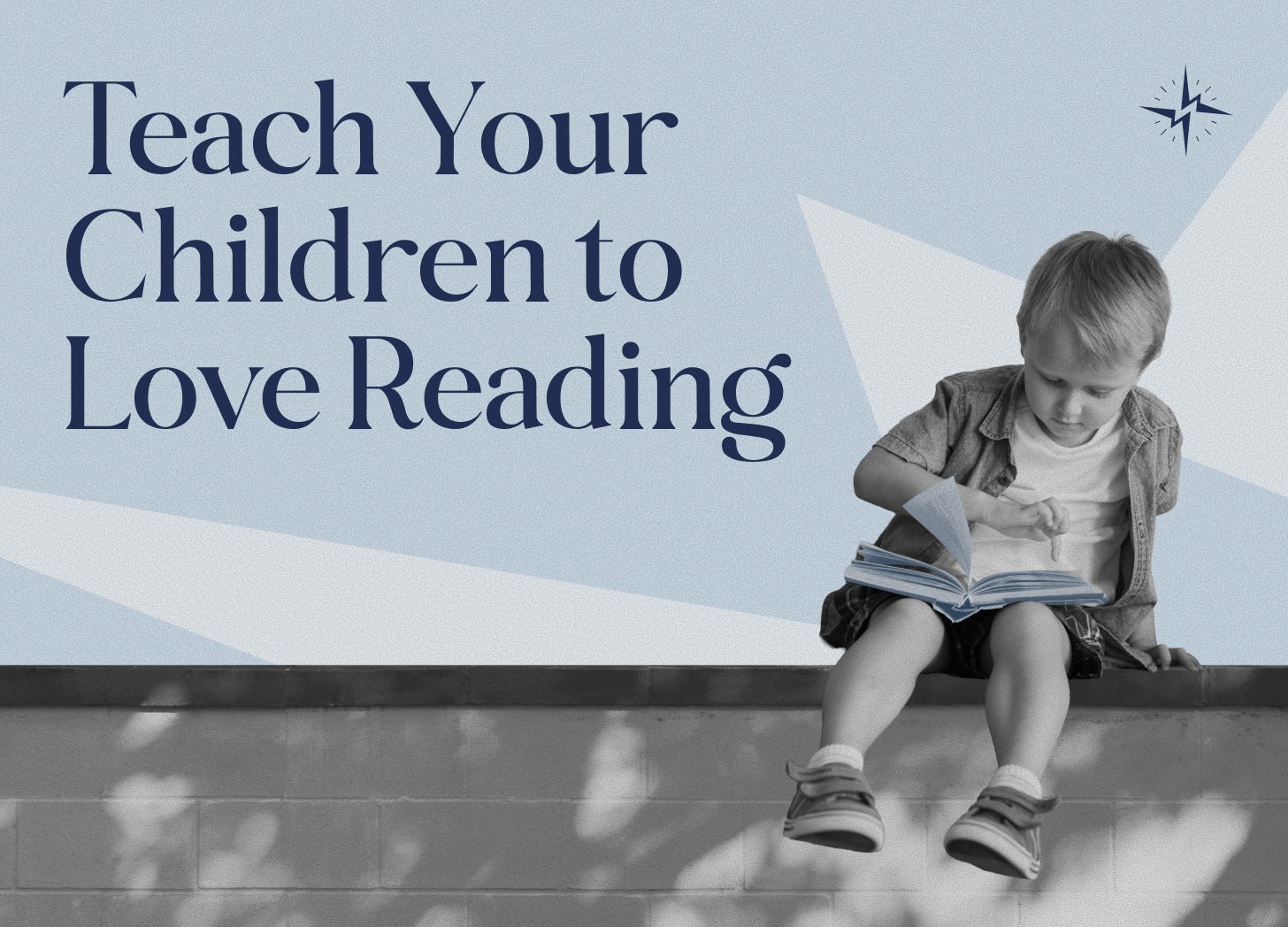
Today’s children have many options when it comes to media consumption—perhaps too many. Video games, Spotify, YouTube, TikTok, and other social media all compete with the written word for their attention. Today’s overwhelmed schools reinforce this shift through classroom devices and digital textbooks, while popular culture favors digital technologies and media over older analog options. If we want our children to choose reading over flashier, more enticing alternatives, parents must cultivate a love of books.
Too few Americans of any age read consistently. The 2023-24 National Survey of Children’s Health found that only 59.7% of U.S. children ages 0–5 had a family member read, sing, or tell stories to them every day during the past week. Reading habits are established early in life, making childhood exposure to books one of the strongest predictors of lifelong reading. The trend extends well beyond early childhood. The New York Times reported that “From 2003 to 2023, the share of Americans who read for pleasure fell 40 percent, a sharp decline that is part of a continuing downward trend.” A recent article in The Atlantic lamented that “the end of reading is here.”
This decline in reading has real consequences. The written word remains the best medium for careful reasoning and the preservation of knowledge. In his 2011 bestseller, The Shallows: What the Internet Is Doing to Our Brains, Nicholas Carr argues that “media aren’t just the channels of information…they also shape the process of thought.” Books are best, he argues, for concentration and contemplation. They demand mental discipline, cultivate sustained attention, and allow for clearer, more sustained lines of argument. Carr contends that the transition from oral to literate culture laid “the foundation for the achievements of the Western world.” The invention of the printing press around 1440 democratized literacy, making the written word accessible to far more people.
“The written word is one of the foundations of Western civilization.”
A love of reading also yields significant academic benefits. According to the UK’s National Literacy Trust, “twice as many children and young people who enjoy reading in their free time have above average reading skills than children who don’t enjoy it (34.2% vs 15.7%).” Frequent readers develop stronger critical thinking, vocabulary, writing, and cognitive processes, according to the 95 Percent Group. Reading builds background knowledge, enhances memory, and improves comprehension, spelling, concentration, and sustained attention. Together, these benefits contribute to higher academic achievement and better prepare students for lifelong learning.
The written word is one of the foundations of Western civilization. As Nicholas Carr observes, “The linear, literary mind has been at the center of art, science, and society…it’s been the imaginative mind of the Renaissance, the rational mind of the Enlightenment, the inventive mind of the Industrial Revolution.” Moreover, the habits created by the disciplined, deliberate reasoning of the written word prepare citizens for responsible self-government. In Amusing Ourselves to Death: Public Discourse in the Age of Show Business, Neil Postman argues that reading cultivates rationality, the ability to weigh competing ideas, and to make sound generalizations. In short, literary culture elevates public discourse and deliberation. It is a prerequisite for independence and self-government.
THE BOTTOM LINE
The hallmarks of our civilization—analytical reasoning, historical consciousness, philosophy, science, systematic law, theology, and individual reflection—depend on a literate society. It is up to parents to ensure that the next generation loves and embraces the written word. Without that foundation, the broader cultural achievements sustained by a literate society cannot endure.
 | A guest post by
|
Just take away the internet and tv
Observing children and now grandchildren, reading is critical to developing an ability to understand and manipulate symbols, so it helps with math as well.